Fine Dentistry
What bothered him was obvious at once. What mattered most was not.
No one notices the moment a tooth becomes discoloured, shorter or starts to shift. It happens slowly. A little less length. One day a tooth sits slightly differently. The shade looks more yellow, the gums a little redder. Years, lifestyle, stress and habits leave their mark, without there ever being a single moment when you notice. Until one day you look in the mirror, or see an older photo, and think: my teeth used to look different.
Diagnosis
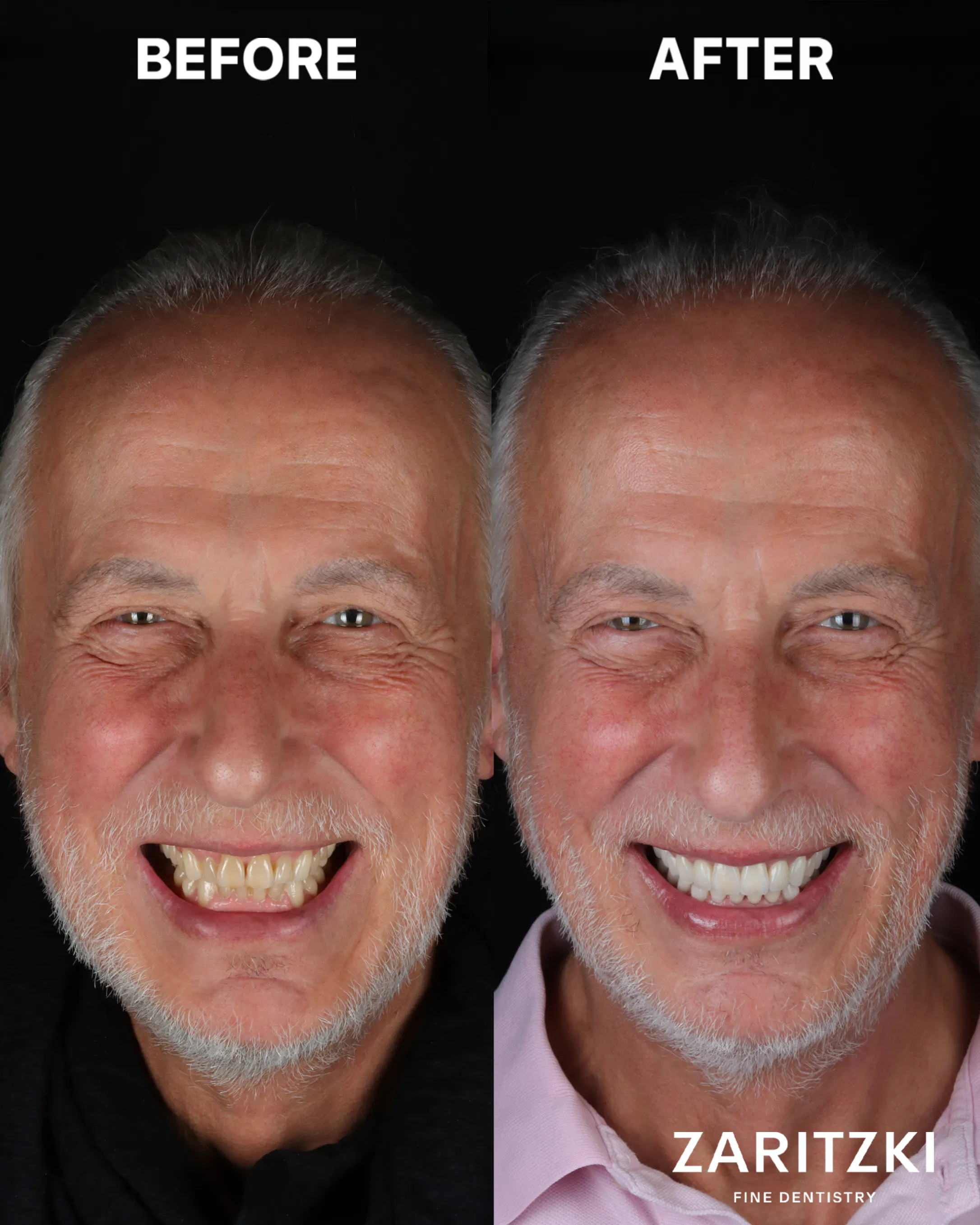
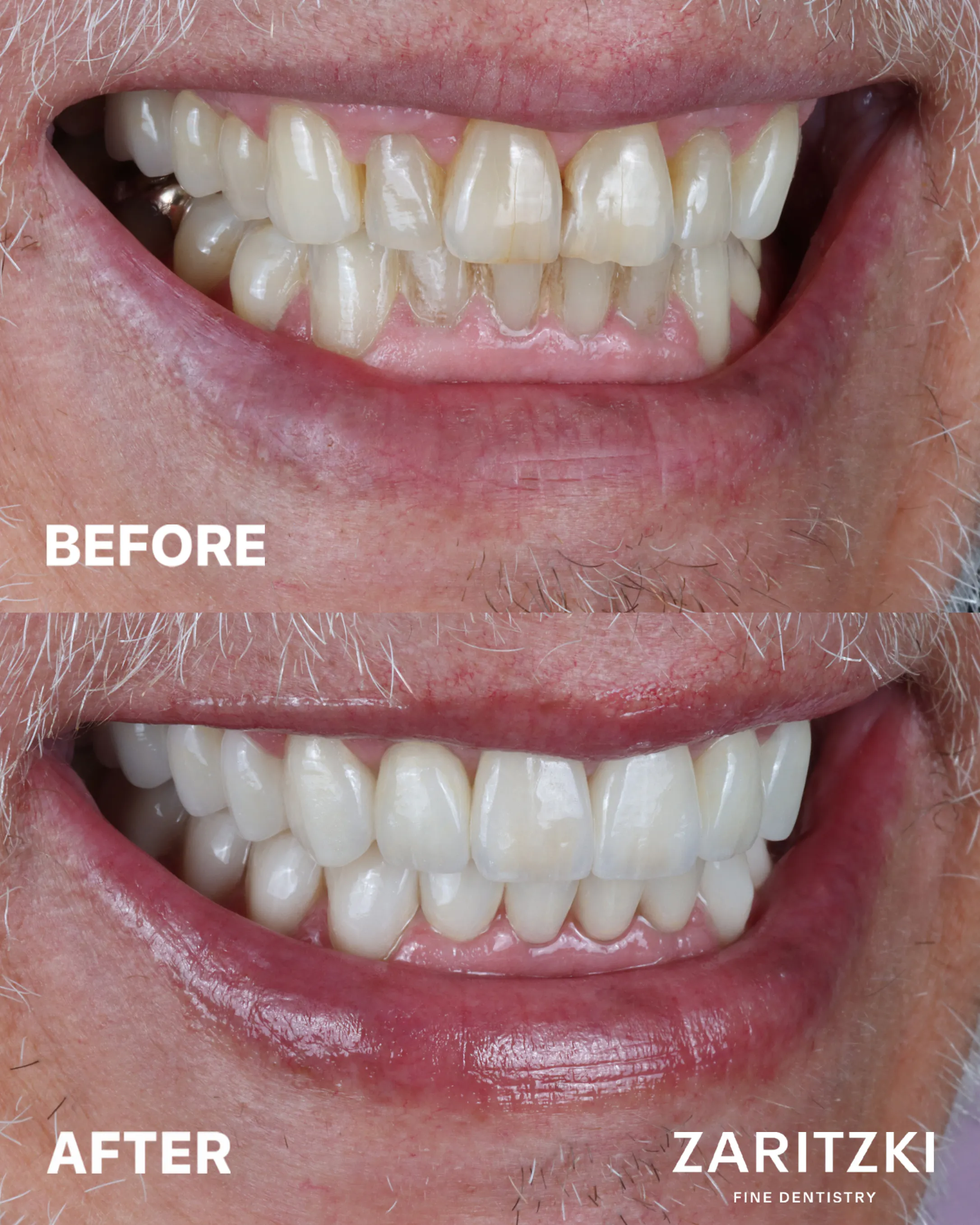
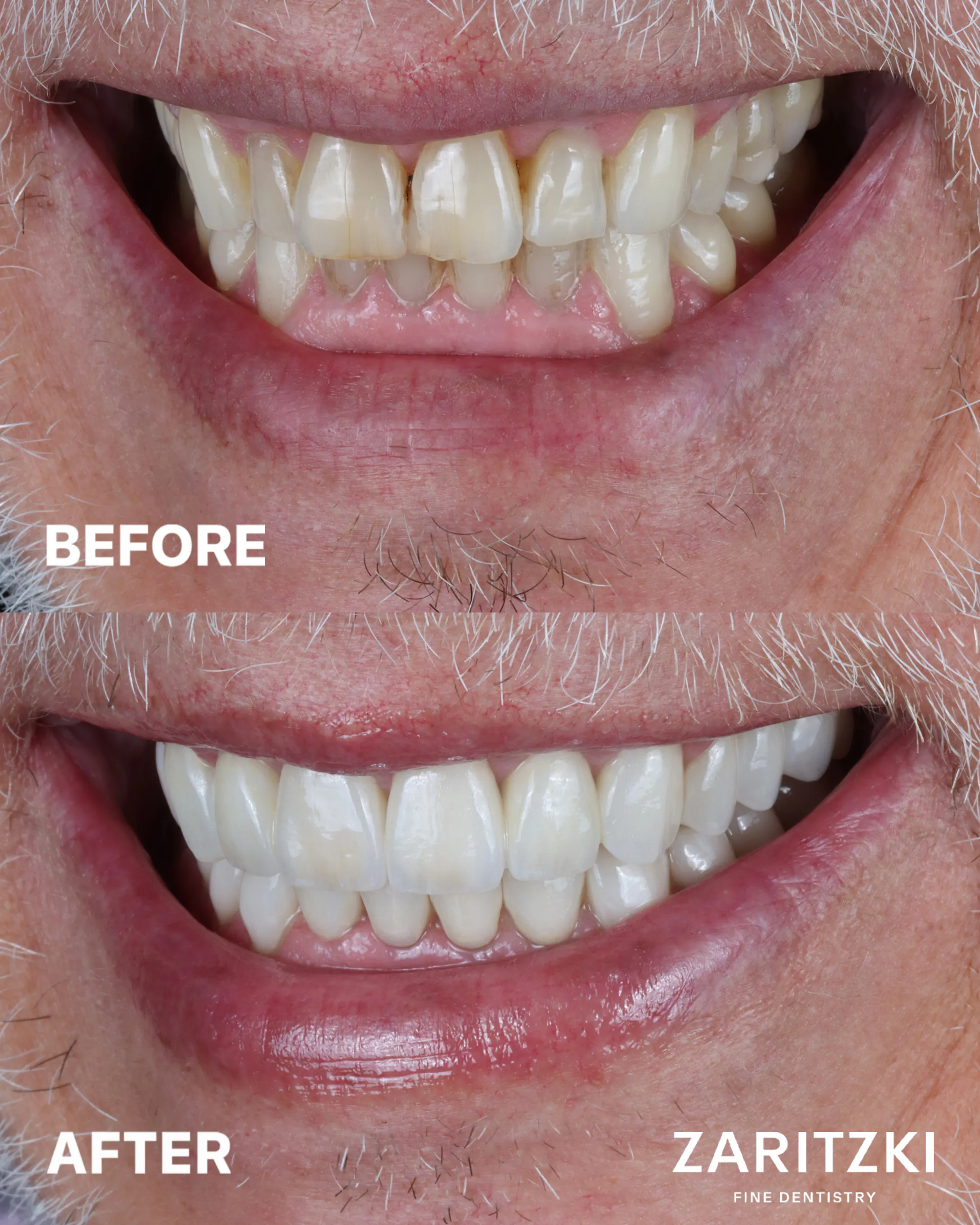
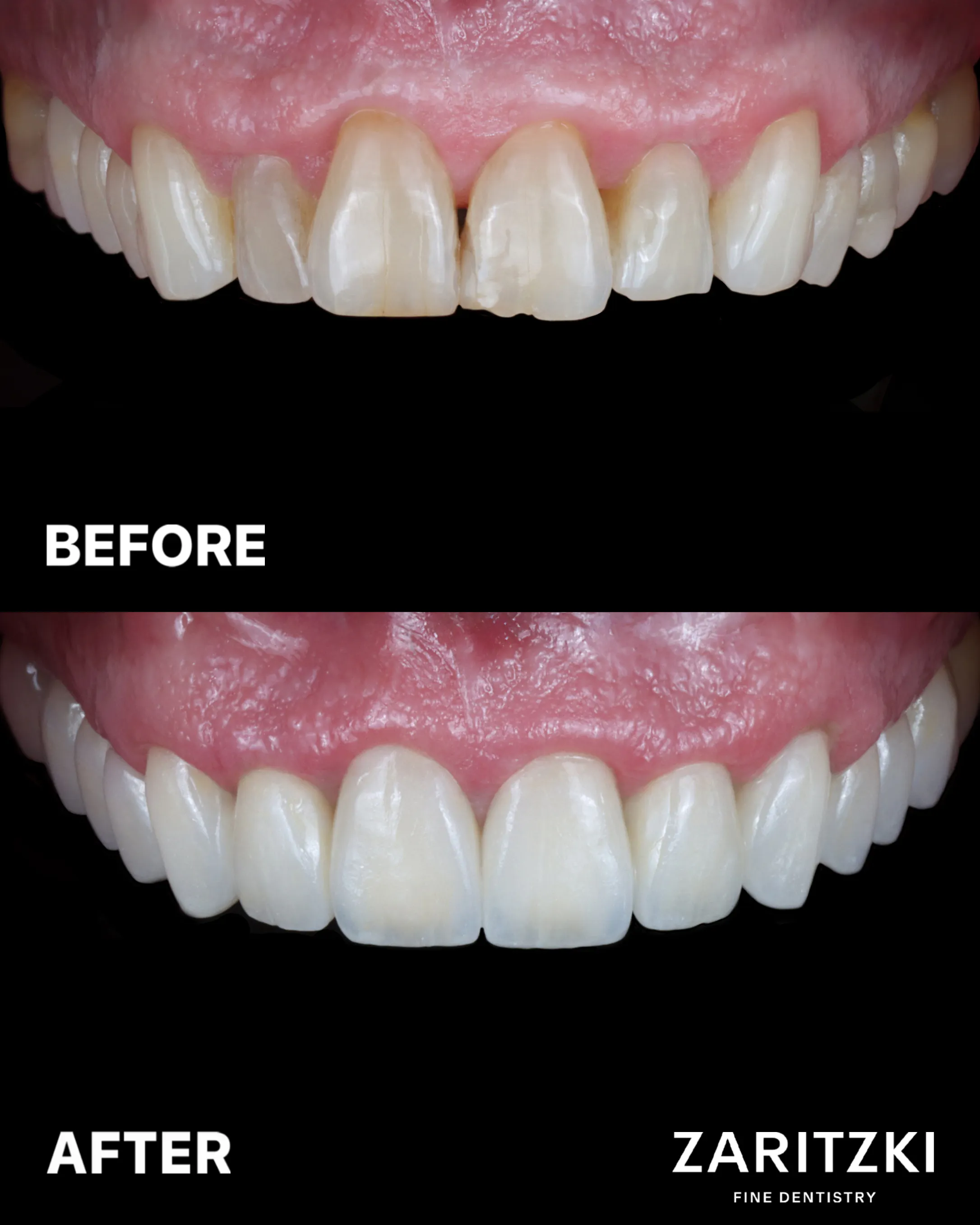
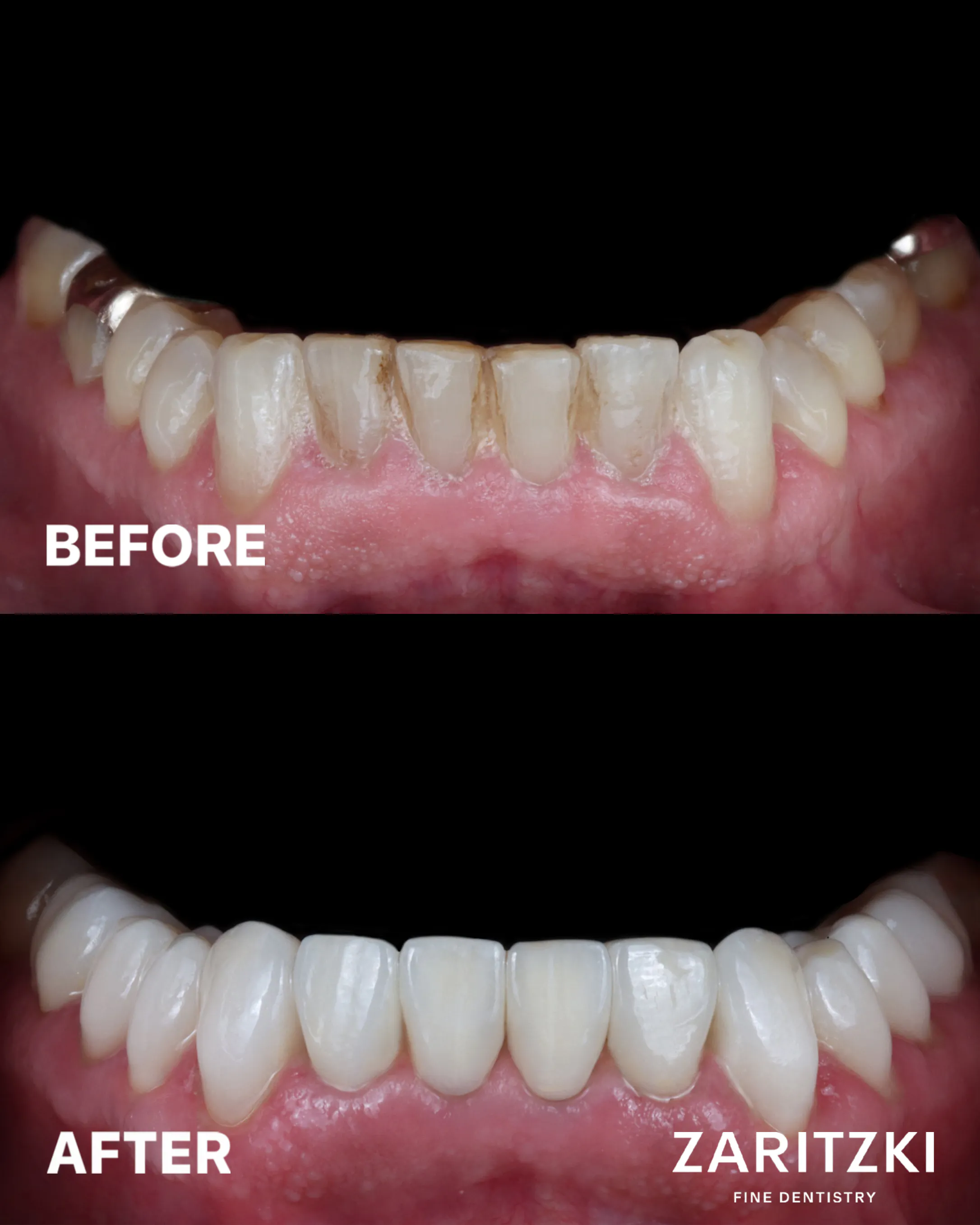
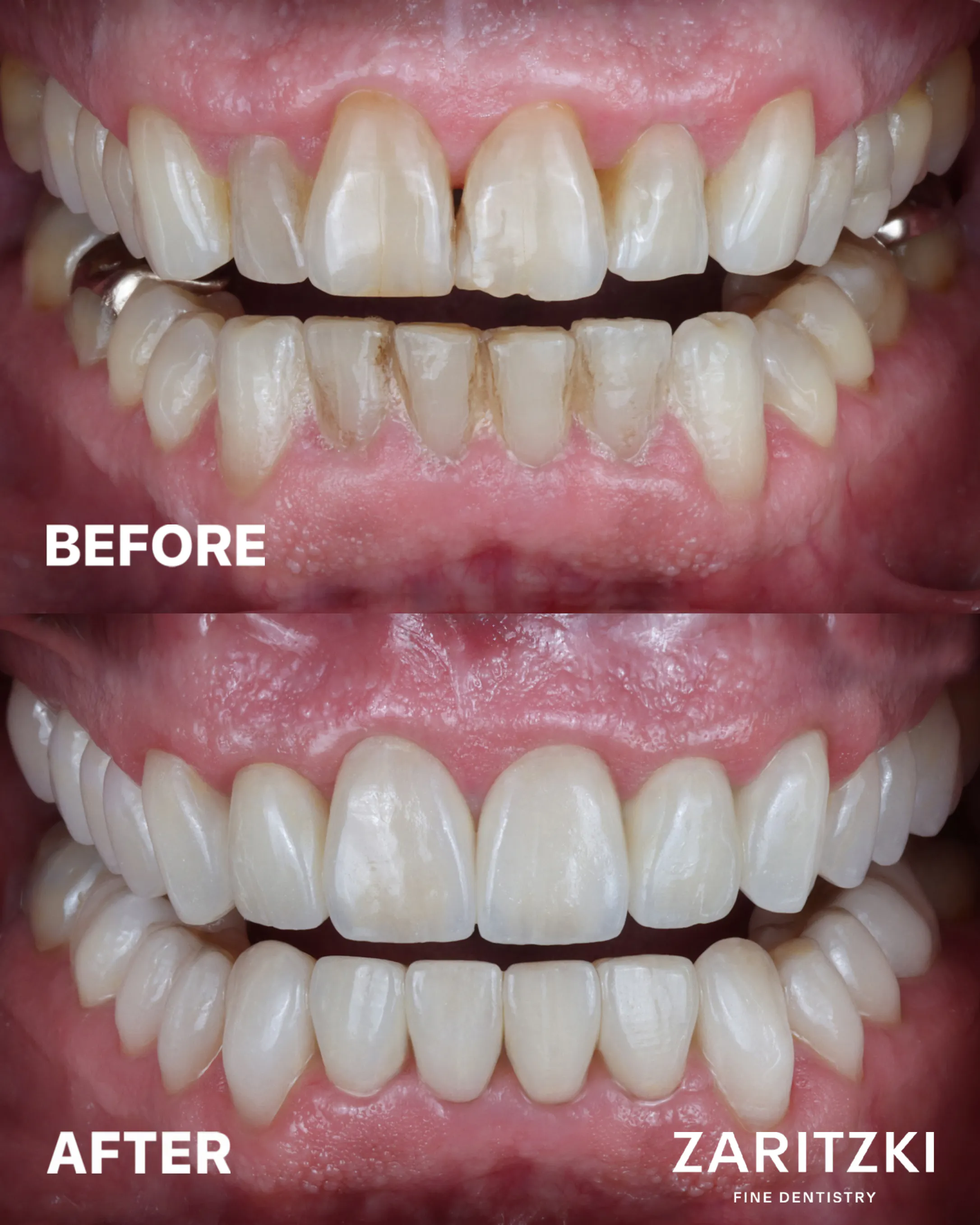
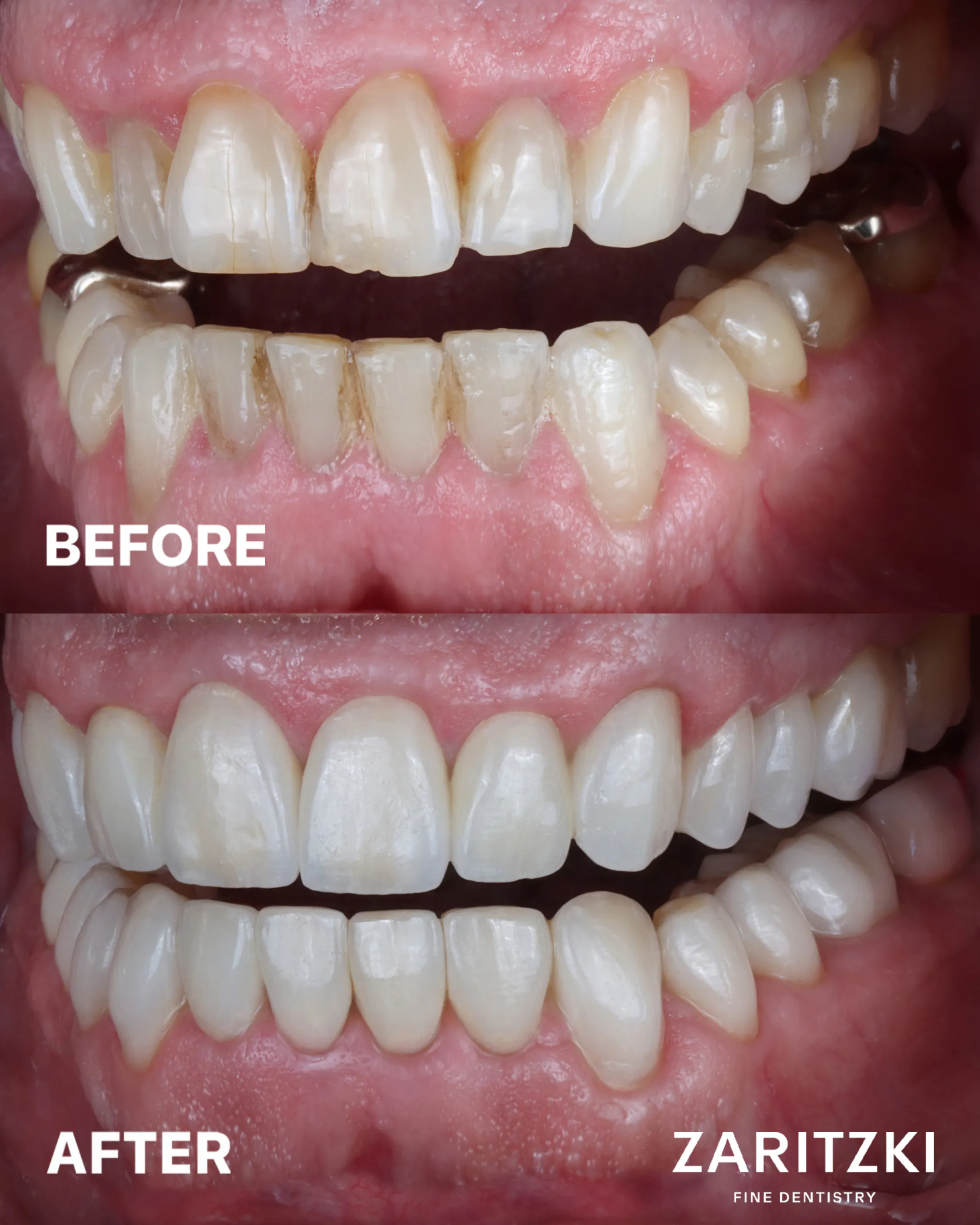
Generalised tooth wear with significant loss of tooth length and natural incisal edge anatomy, discolouration, and changes in the alignment and position of individual teeth. In addition, there were older, failing restorations from previous treatment elsewhere.
The loss of tooth structure had reduced the bite height. The teeth no longer met properly when biting or during jaw movements. During sideways movements in particular, the back teeth no longer separated from one another as they should. As a result, forces were no longer distributed in a controlled way. Individual teeth and restorations were placed under greater strain, as were the chewing muscles and jaw joints. This encouraged further wear and subsequent damage.
The Decision
A purely aesthetic correction would have fallen short. Tooth length, bite height and load had to be rebuilt together. Vertical Restore was used first to determine how much height could be restored. Building on this, the tooth shapes were replanned so that the teeth meet stably again when biting, and forces are distributed in a more controlled way during chewing and jaw movements. The older, failing restorations were not simply kept, but replaced wherever they no longer fitted the new concept functionally or aesthetically. Only when height, contacts and movements were right were shape and shade implemented definitively.
Goal
Not to correct tooth by tooth, but to plan the entire result in advance as one: tooth lengths, alignment, shade, bite height, contacts and existing restorations. Aesthetically, the smile was to look clearer, brighter and more natural again. Functionally, it also had to be clear how the upper and lower jaws would meet afterwards, how forces would be distributed and how the bite would work during movement. Define the whole picture first. Then treat each individual tooth so that it fits exactly into it.
Our Approach
- Planning with The Facial Aesthetic Concept©: Before a single tooth was changed, the final overall picture was defined: tooth lengths, alignment, shade, bite height and the existing restorations were planned together for the first time.
- Real Face Preview: The planned changes were assessed in the face. Not tooth by tooth, but as a smile: how much length should come back? Which alignment looks right? How does the expression change?
- Vertical Restore: The bite height lost over the years was rebuilt. This created the space to bring the worn teeth back into natural proportions, rather than simply adding material.
- Bite at Rest and in Motion: What mattered was not only where the teeth meet when biting. For chewing and sideways movements, too, it had to be redefined which teeth make contact, and which should separate.
- Test Drive: The new tooth length, bite height and function were first tested in the mouth. Speaking, eating, laughing, biting: what had been planned in theory had to prove itself in everyday life before anything became final.
- Fine-Tuning: Only now were shape, alignment, contacts and details refined further. Changes were still possible as long as the result had not yet been transferred into definitive ceramics.
- Definitive Implementation: The older, failing restorations were replaced in line with the overall plan, and the tested situation was transferred into definitive ceramics.
Result
Many individual problems became one shared result. The teeth look longer, brighter and clearer in shape again. Shifted positions were harmonised, older restorations were integrated into the new overall picture and natural proportions were restored. At the same time, the lost bite height was rebuilt and the interplay between the upper and lower jaws was realigned. The teeth now meet in a more controlled way, loads are distributed more precisely and jaw movements were included in the planning.
What looks natural today is the result of a plan that did not begin with individual teeth, but with the entire smile and its bite.
Treatment Time
Four weeks for the definitive reconstruction, after the completed Test Drive.



1/9
Please Note
The treatment shown represents an individual case. Treatment plans and results vary depending on the initial findings.
What are Zaritzki Restorations?
Perfect is the goal. But it must not look perfect. That is the hardest brief in dentistry, and it is decided in three places.
No one should see it. A restoration must not be more regular than the rest of your teeth. Light, surface and translucency are modelled on what is already there, not on an ideal. A tooth has texture, tiny irregularities, its own way of refracting light. That is exactly what is recreated. This is why the ceramics are handmade in a master laboratory, and the shade is matched during a try-in before anything is permanently placed.
It should feel exactly as it did before. Your tongue knows every millimetre of your mouth and finds every edge. Contact points, bite guidance and transitions are therefore crafted so that nothing new feels new. The spaces between your teeth also stay the way you know them. Floss should glide through just as it always has.
Nothing should be taken away. We fight for every millimetre of your own tooth. Every tooth begins with the same question: how much is necessary, and how little is enough? An inlay, as long as an inlay will hold. A partial crown when the biting surface is lost. A crown only when the tooth needs protection all the way round. We work under magnifying loupes at five times magnification and special LED light, with instruments made for this scale, and with the time it takes. Preserving tooth structure takes longer than removing it. That is why it takes longer here.
And because a restoration must fit not only the tooth but the face, it begins with The Facial Aesthetic Concept©: the aesthetic goal is defined first, and bite guidance and load are built around it. What remains is the impression that nothing was done, only that everything is right.

How did Dr. Zaritzki become a specialist?
Dr. Felix Zaritzki has 27 years of experience in full-mouth transformations, that is, aesthetic and functional full-mouth rehabilitations. Over this time, he has placed thousands of veneers and non-prep veneers for discerning patients from Germany and abroad. International training and close exchange with renowned dentists and master dental laboratories around the world, combined with the development of his own treatment techniques, have shaped the aesthetic approach behind his reputation for veneers.